


CVAG South Gallery
EMMA GOLDMAN AT THE FRICK MUSEUM
Persimmon Blackbridge
“You go back and look at the 1890s, McKinley, that was when we were proportionately the richest…” -Donald J. Trump
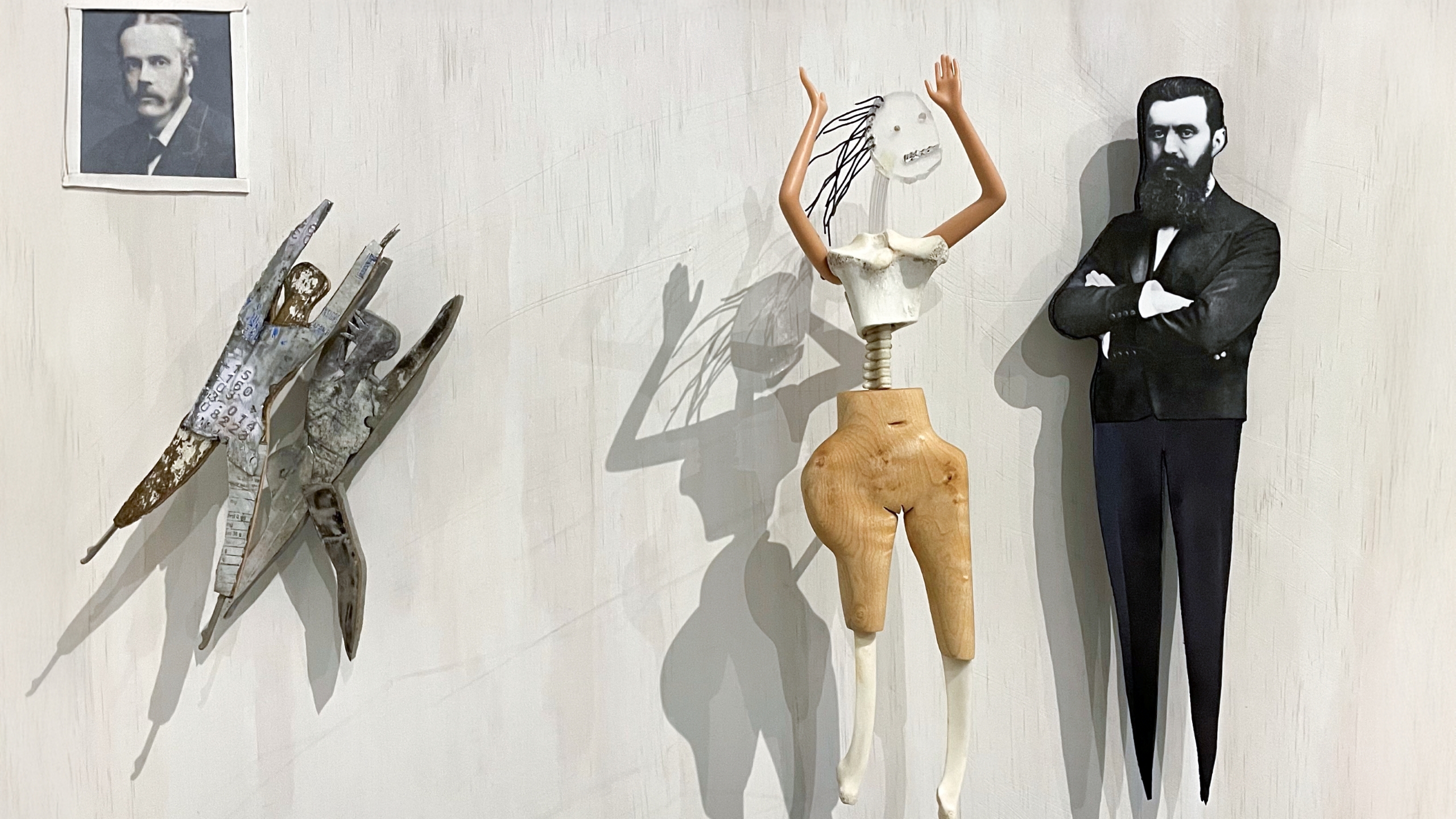
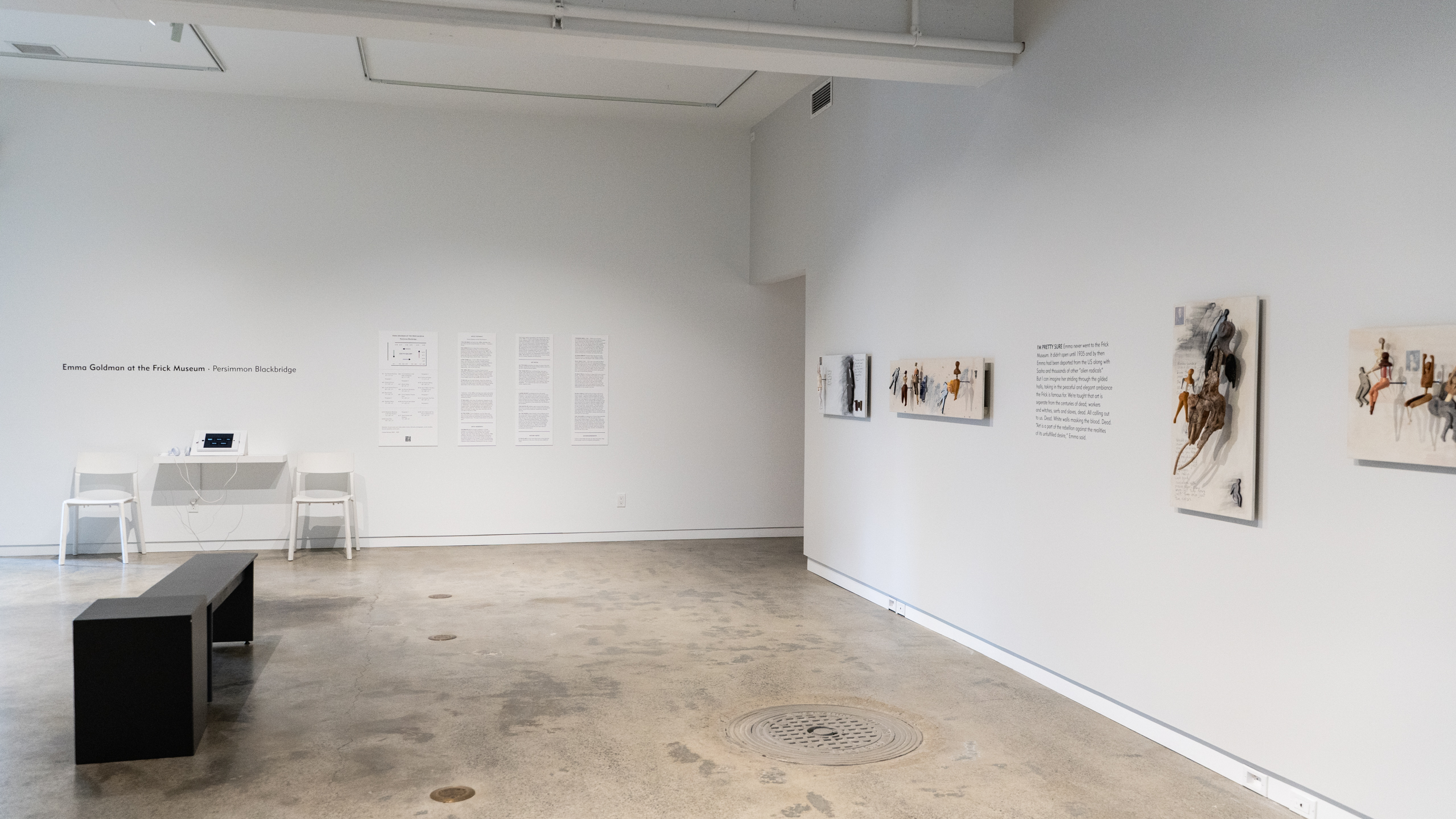
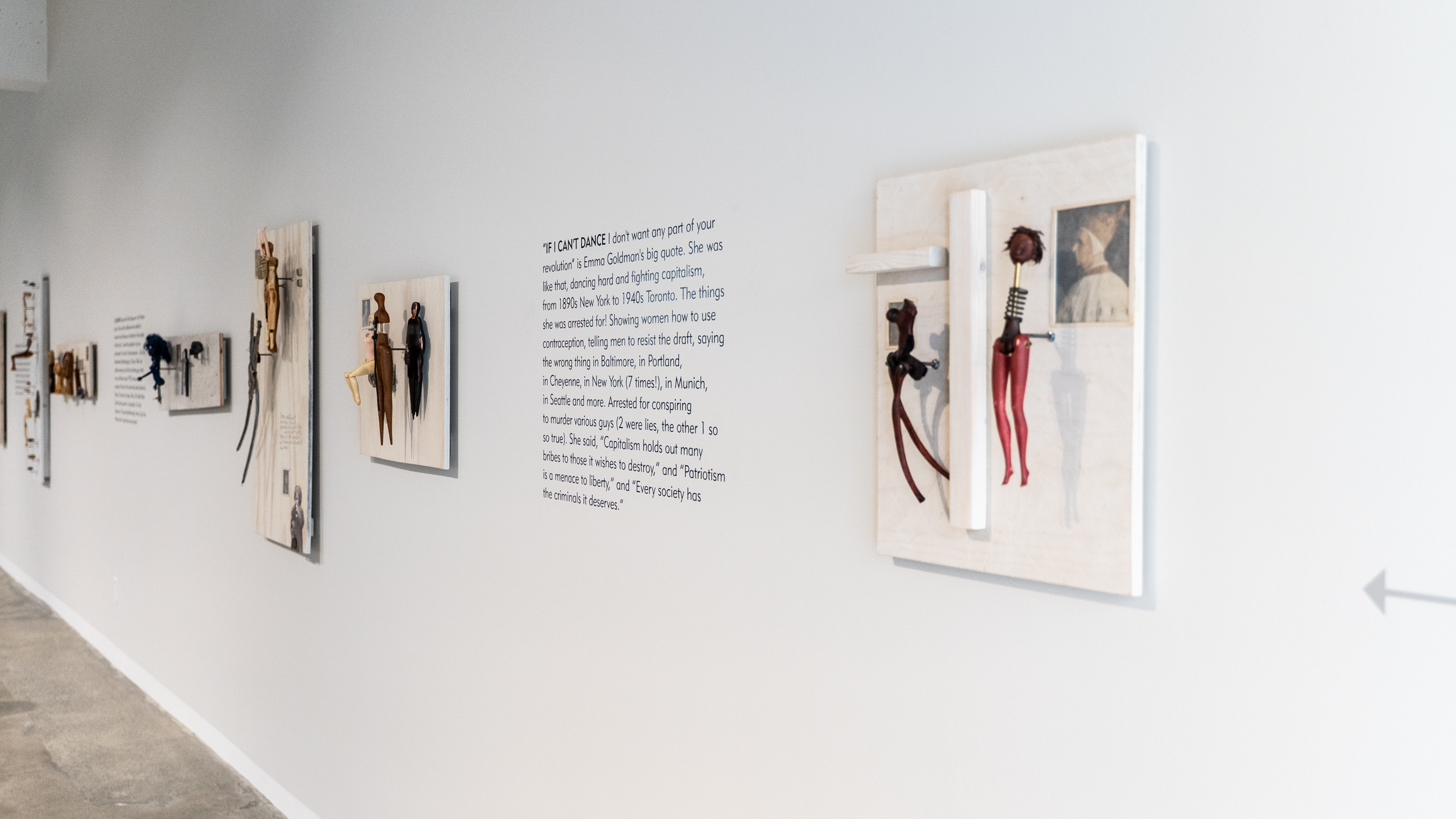
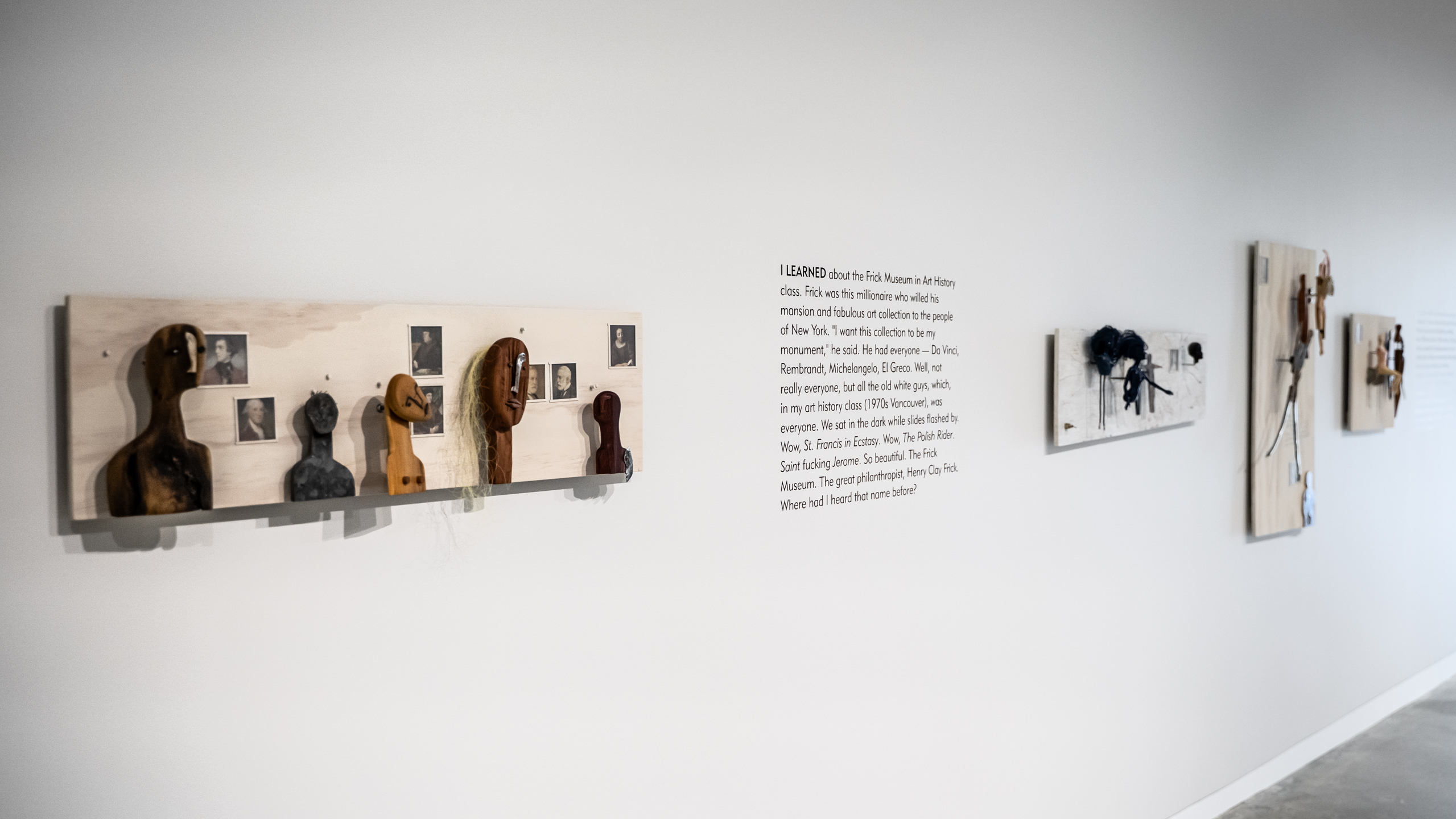
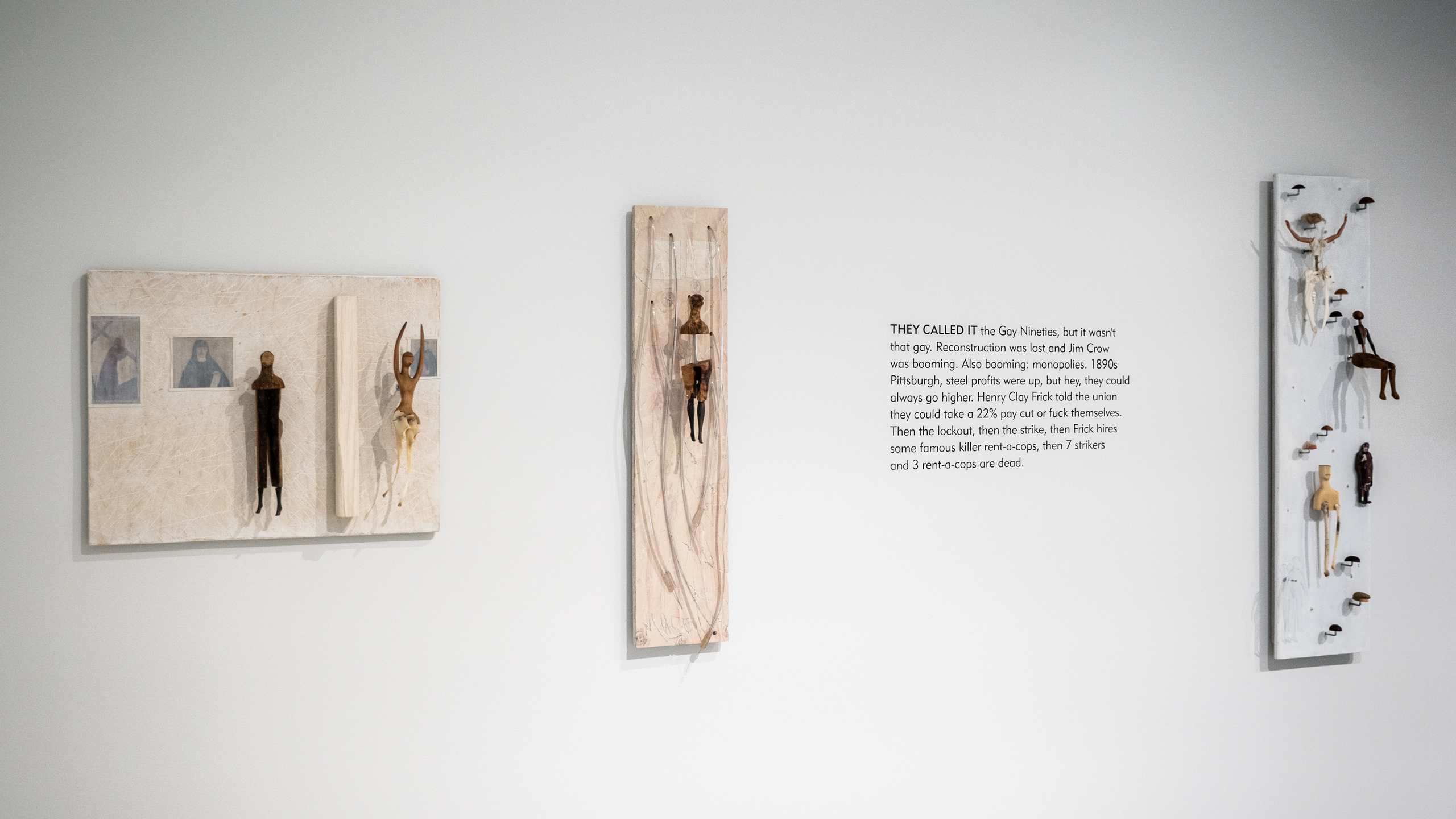
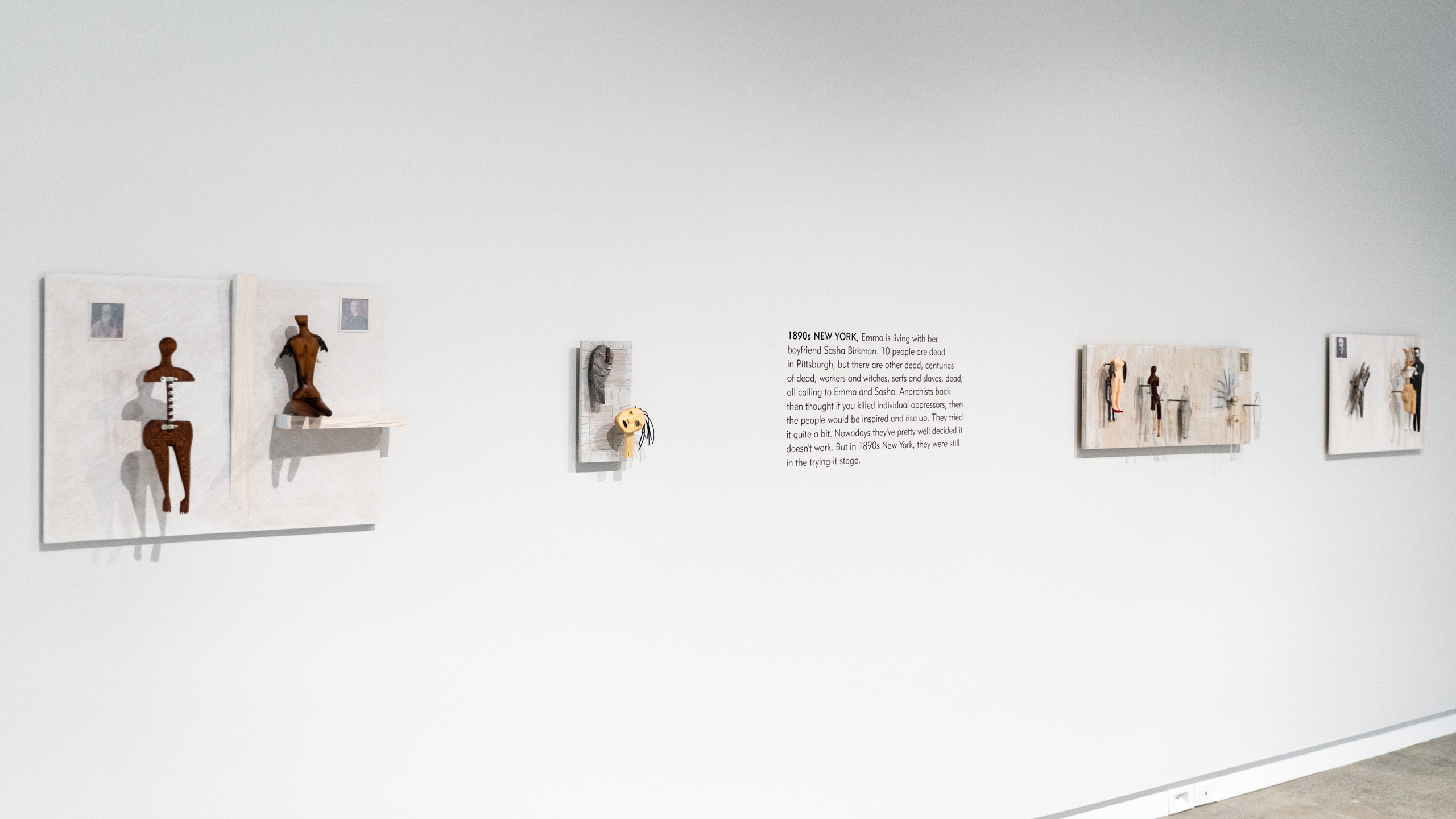
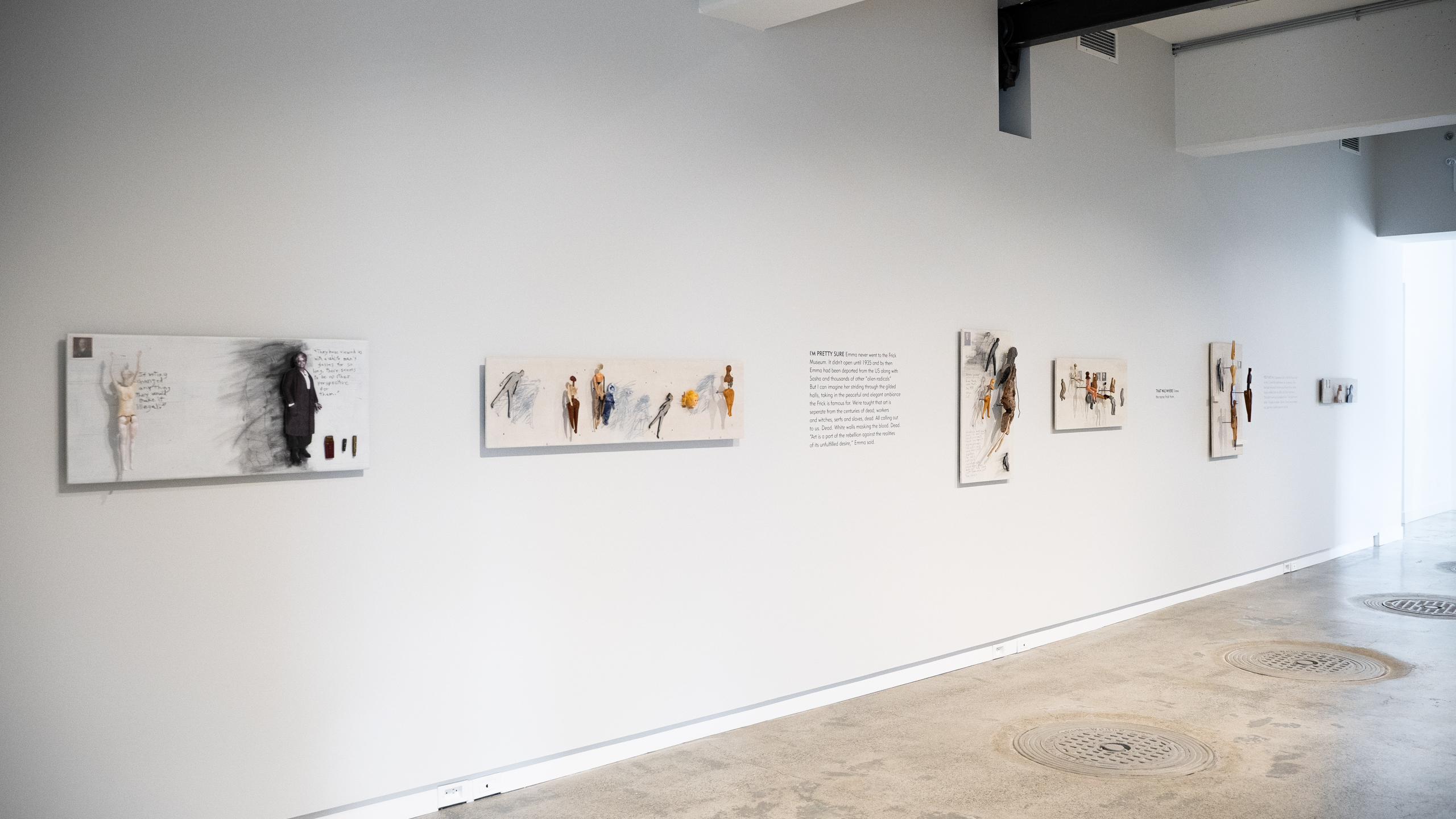
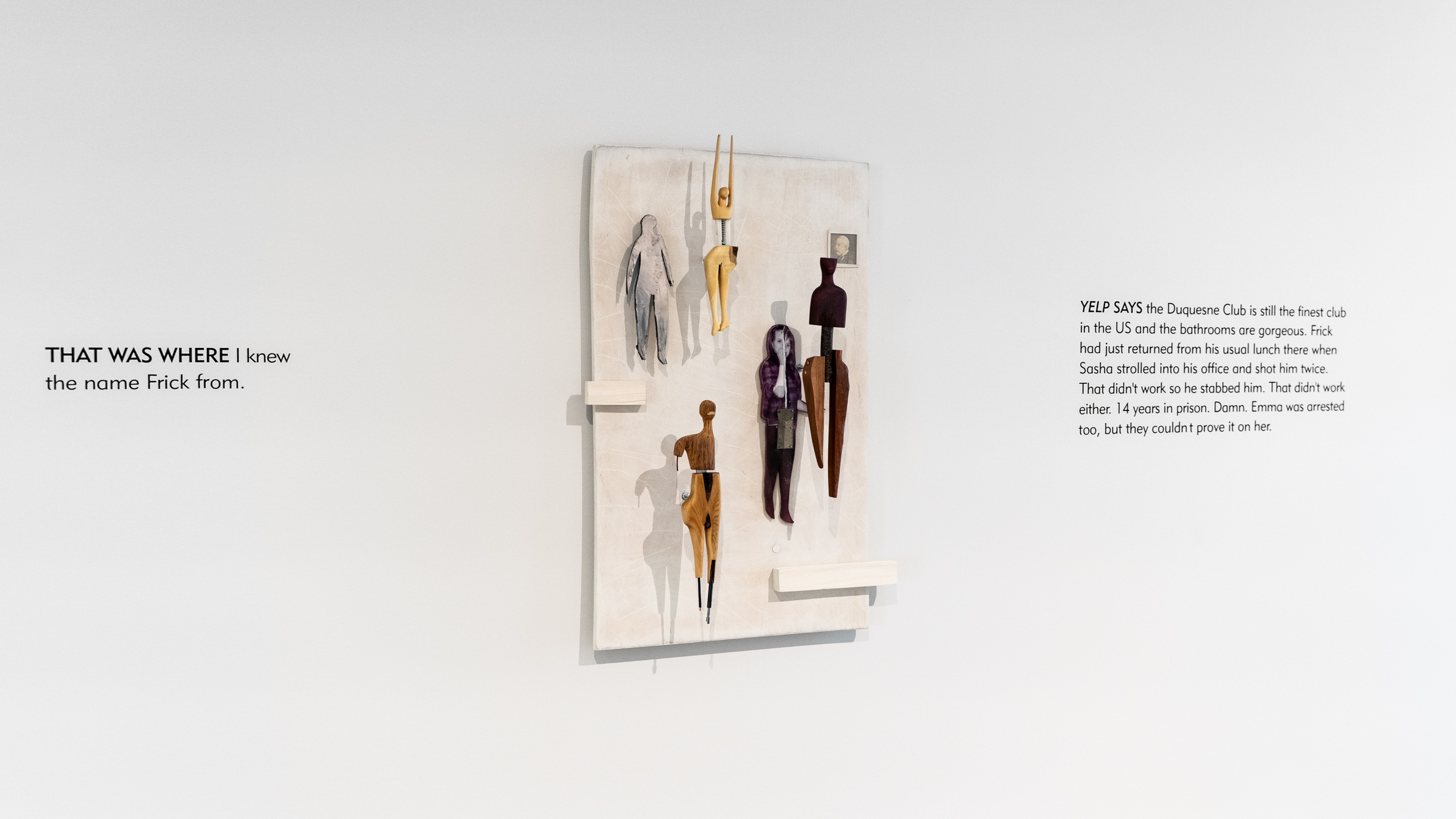
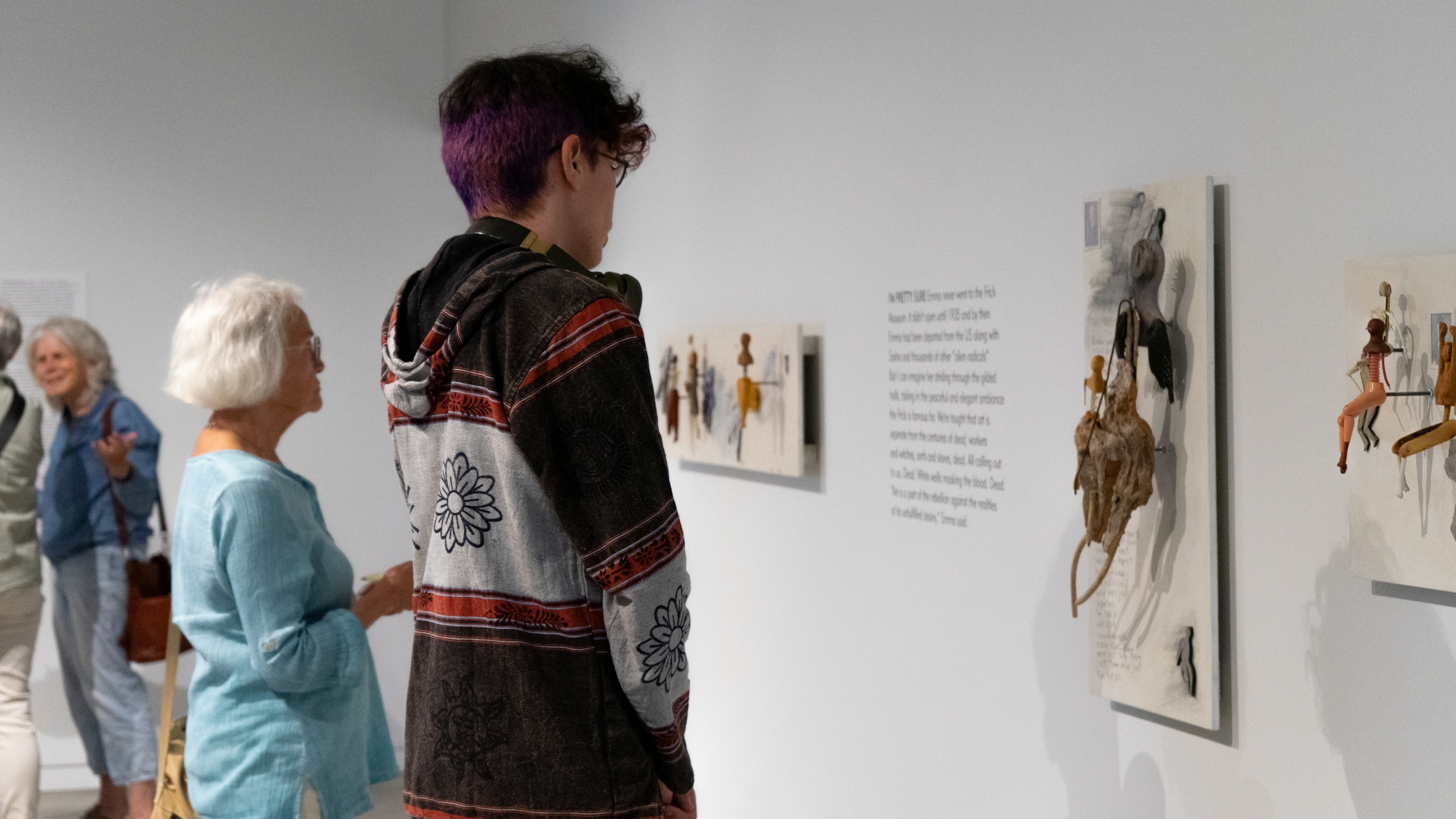
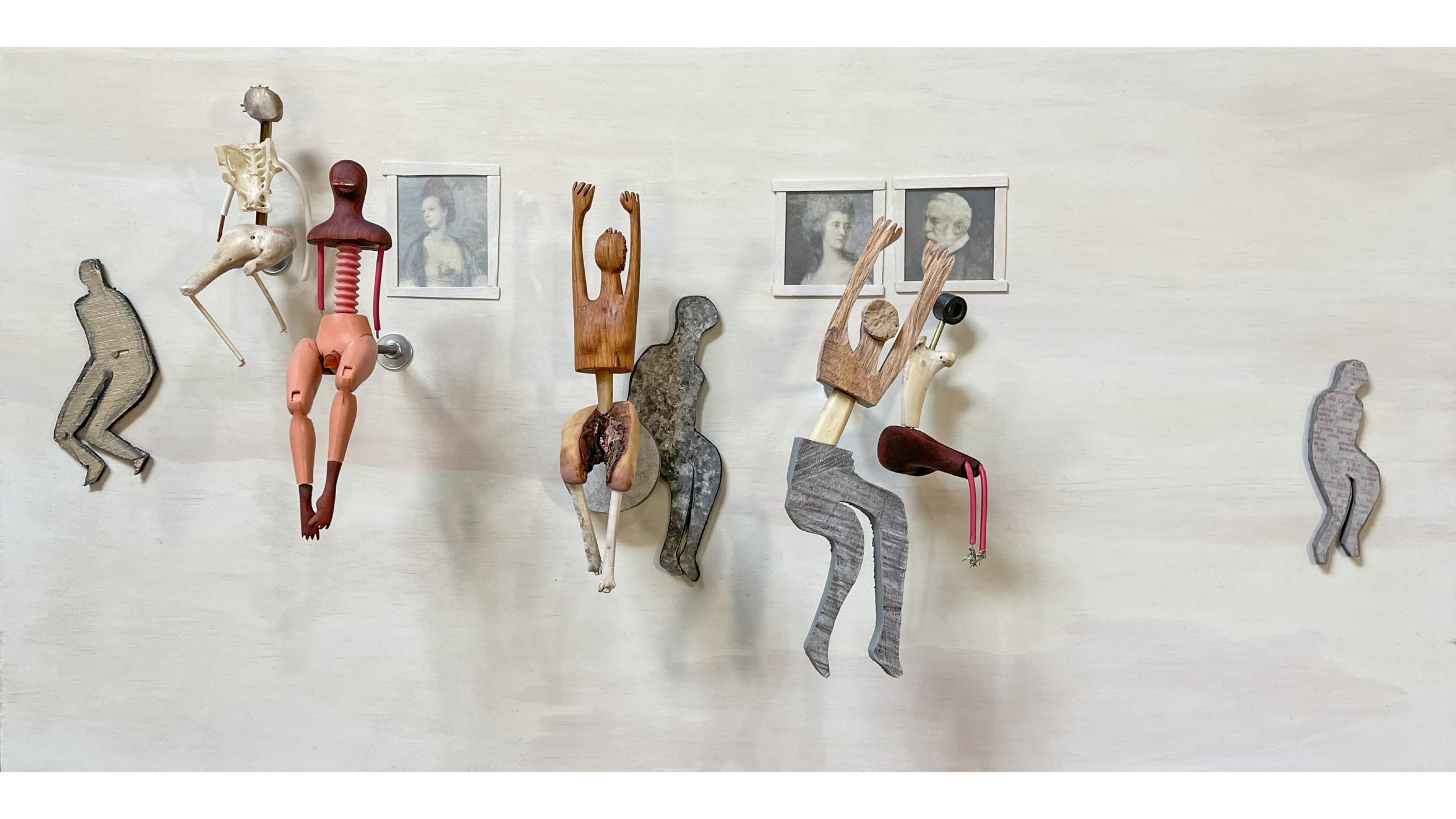
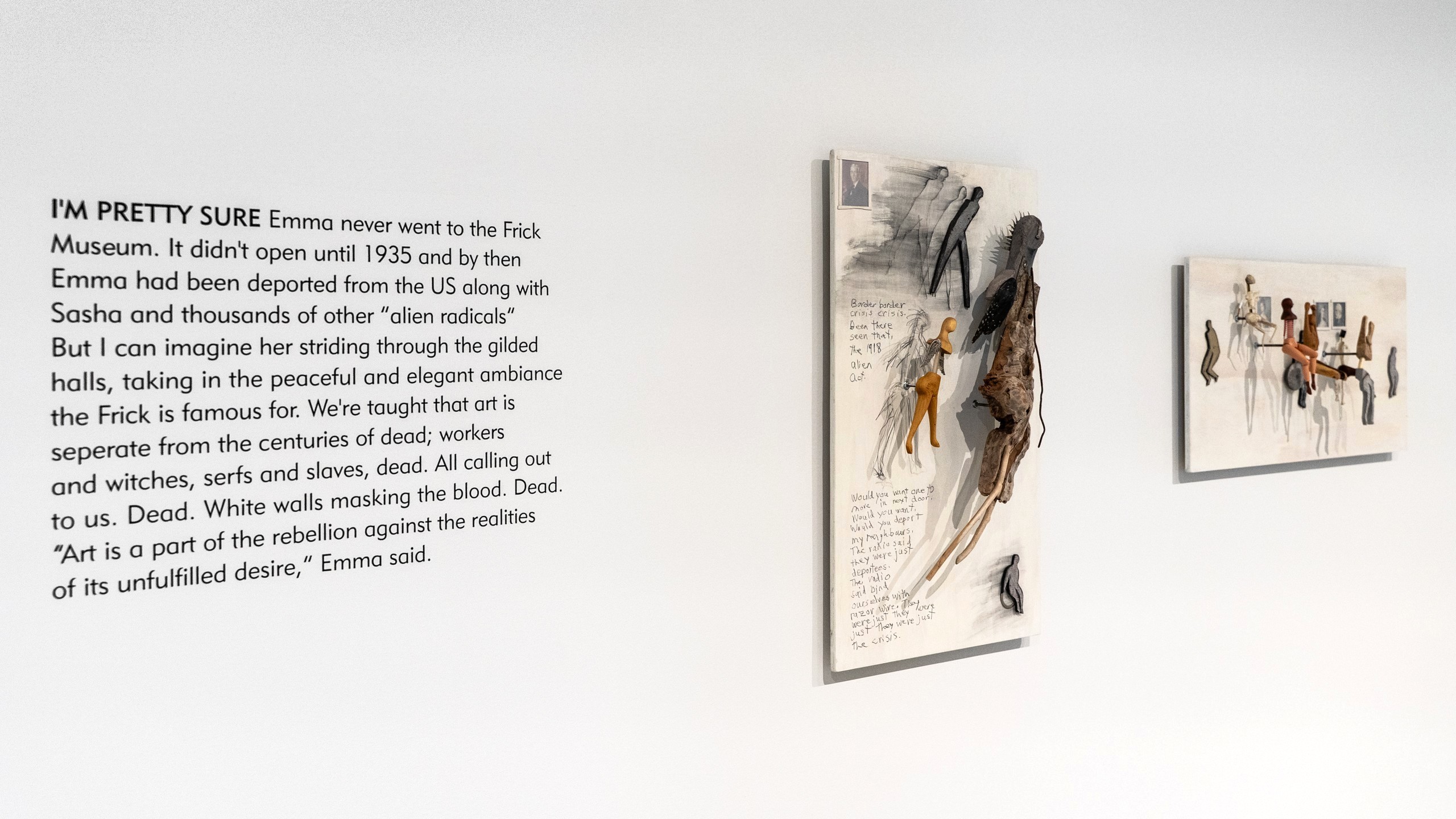
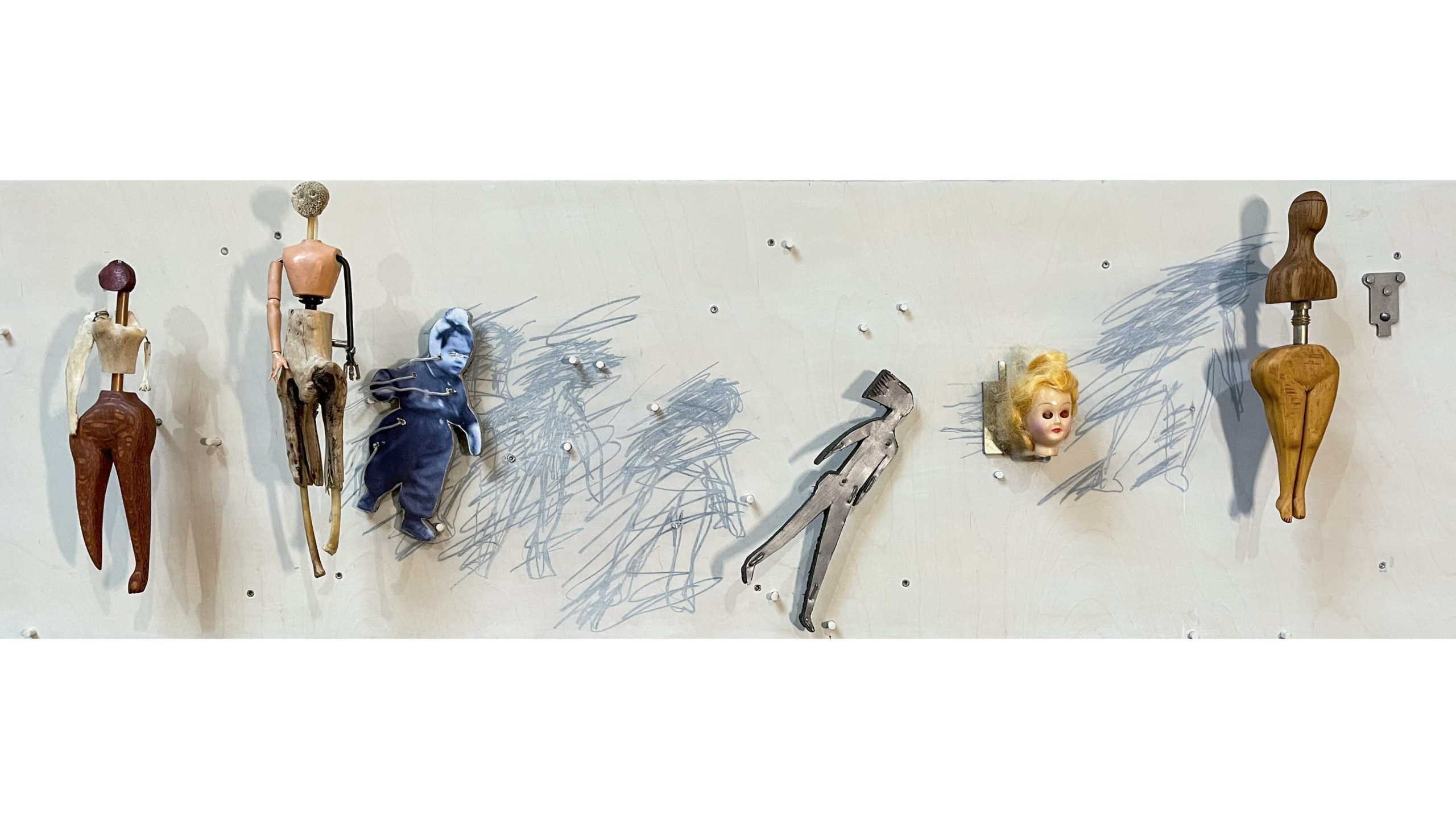
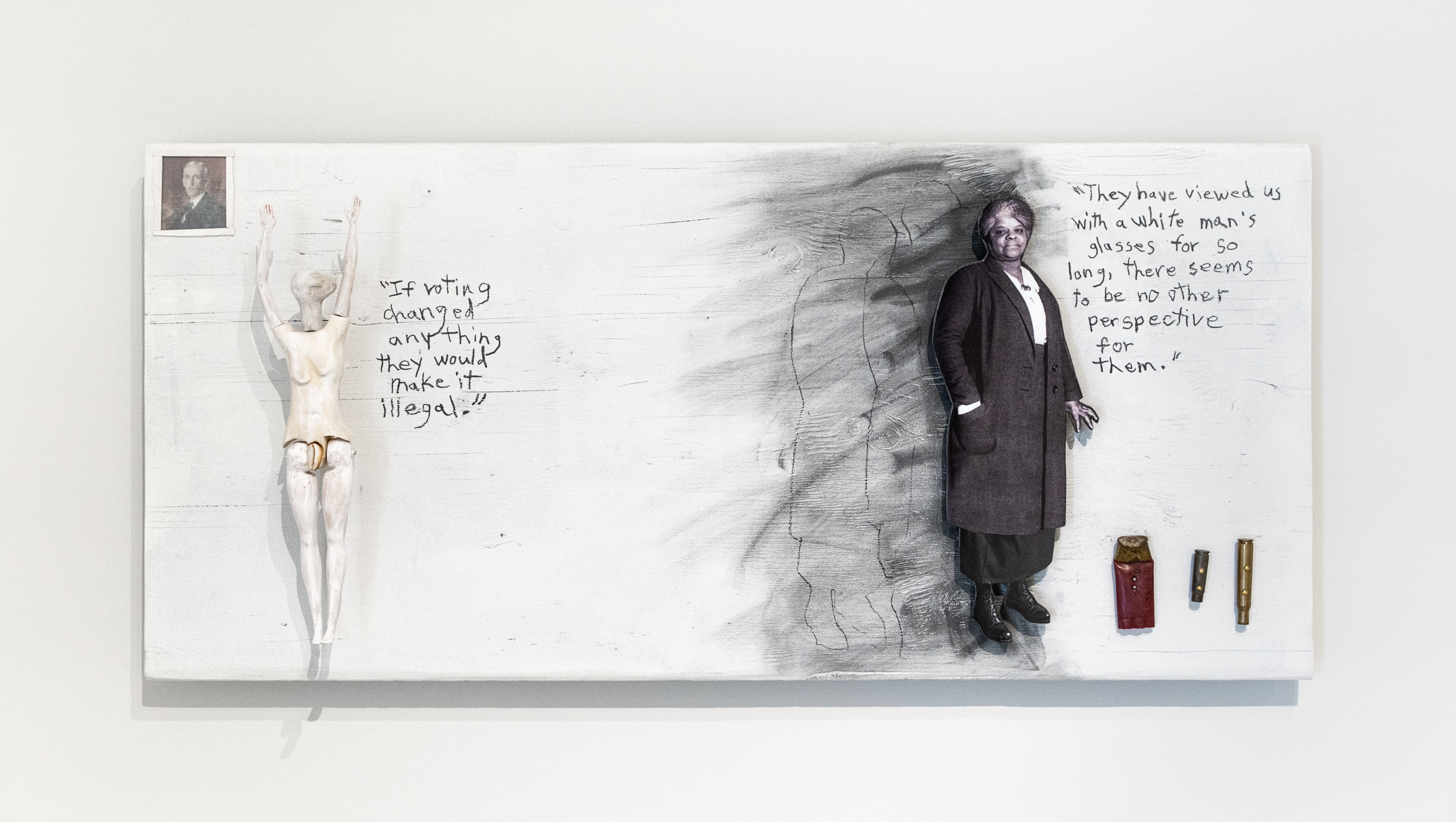
This series is kind of about the notorious Emma Goldman (shameless anarchist, out loud feminist and exuberant activist, disturbing the peace in the 1890’s US and beyond). But it’s also kind of about a class I once took. It’s an extended riff on a fabulously flamboyant woman, telling big truths and making big mistakes as she danced her way through history. But it’s also… kind of not.
A few years ago, I wrote a little story about Emma, Henry Clay Frick and me, and then I started making sculptures as illustrations for the story, imagining Goldman in a place she never went to, speaking to people she never knew. I was thinking about the 1890s all the time (apparently, I was not the only one).
The 1890s are famous as a time of great income inequality, unmatched in modern history (until now, this age of mega billionaires where we live today). Industrialists like Henry Clay Frick slashed wages and broke unions in order to amass great fortunes in mining, railroads and real estate. It was indeed a time of vast wealth, but only for a few.
It was an age of racist backlash, where the victories of Reconstruction in the US were being destroyed (just as the victories of the twentieth century civil rights movement are being dismantled in the US today, under the guise of fighting “wokeness”. In the 1890s, lynchings were used as the lethal enforcement tool of Jim Crow, and Black activists like Ida B. Wells were fighting for people’s lives (as Black Lives Matter activists do today).
It was also a time when US politicians whipped up anti-immigrant feelings and enforced mass deportations. Jewish immigrants like Emma Goldman were particularly targeted as “Bolsheviks” and radicals (just as Muslim immigrants are targeted today). Eventually Goldman was deported for her political views, under the 1918 Alien Act, despite having been a US citizen for years. She never returned to the US and died in Toronto in 1940.
In this work, Emma Goldman, in all her flaws and glory, becomes both a scandalous inspiration from history and an unruly vehicle for examining our current times. Like William Faulkner said, “The past is never dead. It’s not even past.”
ARTIST BIOGRAPHY
Celebrated as a Canadian trailblazer in socially engaged art, Persimmon Blackbridge has made queer, feminist, and disability art from the late 70s to today. Together with writer Sheila Gilhooley, she created the 1980s exhibition Still Sane, a then groundbreaking combination of sculpture and text and one of the earliest examples of first-person narrative art in Canada, as well as a pioneering exhibit of disability art. She was a member of the Kiss & Tell collective whose installation Drawing the Line was a potent intervention against censorship in the feminist “Porn Wars” of the 1980’s. In the 90s, Blackbridge collaborated with 27 former residents of BC’s large institutions for people with intellectual disabilities on the installation From the Inside/OUT!, which was instrumental in winning reparations for former residents of Woodlands Institution. From 2015 to 2020, her series Constructed Identities toured Ontario and BC, disputing the social construction of tragic disability. Blackbridge has won many awards for her work exploring identity and the complexities that come with it. These awards include: the 1991 VIVA award for visual arts and the Emily Carr Distinguished Alumni Award in 2000. Blackbridge’s work has been shown across Canada, the US, Europe, Australia and Hong Kong.
RESOURCE LINKS
MORE ABOUT PERSIMMON
AGGV Magazine – Art and Activism: Q&A With Persimmon Blackbridge
Tangle Arts Talks: Persimmon Blackbridge – Spoken Word Performance
Emma Goldman at the Frick Museum and because • not despite | three videos are part of the convergent program because • not despite.
Read the because • not despite e-publication for Persimmon’s history and art notes.
For further insights into the life and creative practice of Persimmon Blackbridge, view the films screened in the George Sawchuk Media Room as part of because • not despite | three videos.


