
CVAG Community Gallery
COMMUNITY ART ACTIVATIONS
Grief, dying, and death. No one can avoid these aspects of life, but collectively we have tried. Anti aging strategies abound to keep us fit, vital, wrinkle free, and clear minded. We use hushed voices and euphemisms when the inevitable happens … “she is putting up a good fight”, “they passed”, “he needs to just get over the loss and get on with life”.
In collaboration with the Comox Valley Hospice Society, the gallery invites the community to participate in two accumulating public art projects that ask us to think about our own DEATH and accept the reality of GRIEF as an enduring and good aspect of living and loving. These art activations are a way of stripping stigma and removing the shrouds of silence and denial that have cloaked the reality of suffering loss and life ending.
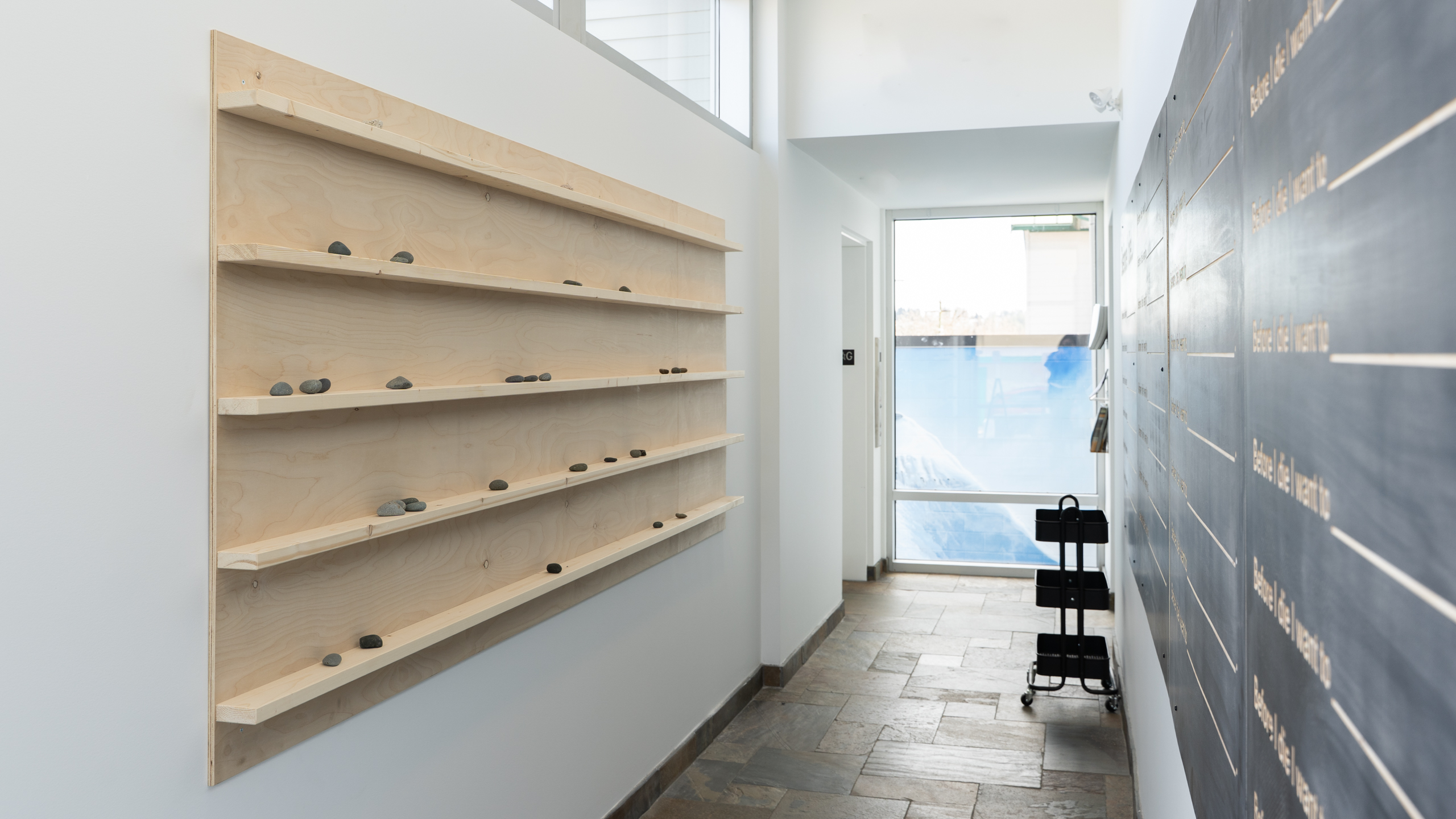
The public art activations — Before I Die and Memory Stones — are available to the community to engage with on a drop-in basis during gallery hours: Wednesdays – Saturdays, 10:00am – 5:00pm.
All ages are welcome.
Instructions and materials can be found in the CVAG Community Gallery. The gallery team in the Hub | SHOP⋮MADE are available to answer questions and go over the ways the public are invited to interact with these accumulating public art projects.
BEFORE I DIE
Community Art Activation | Global Art Project (Public Domain)
Originating Artist | CANDY CHANG
Project Description:
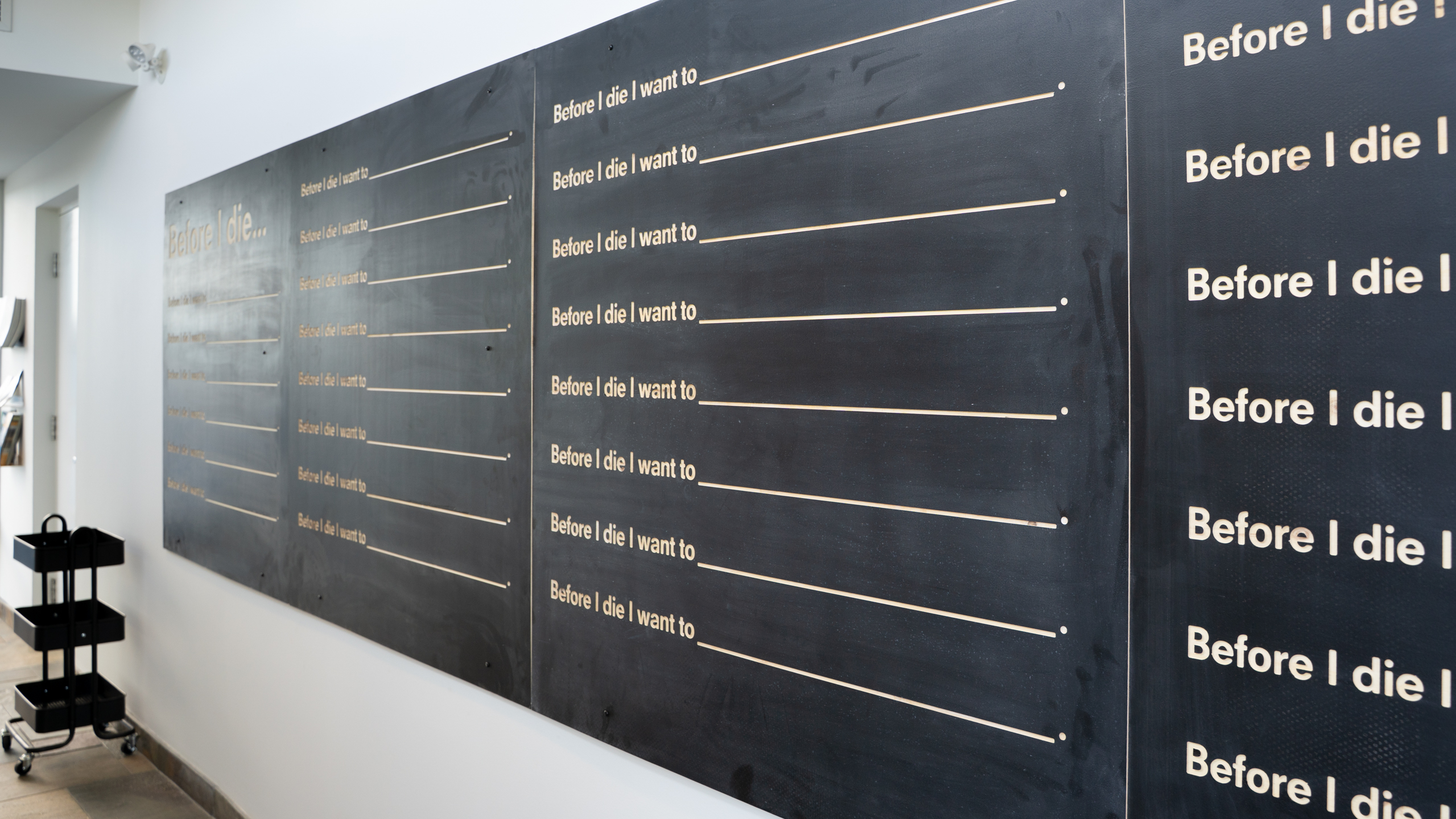
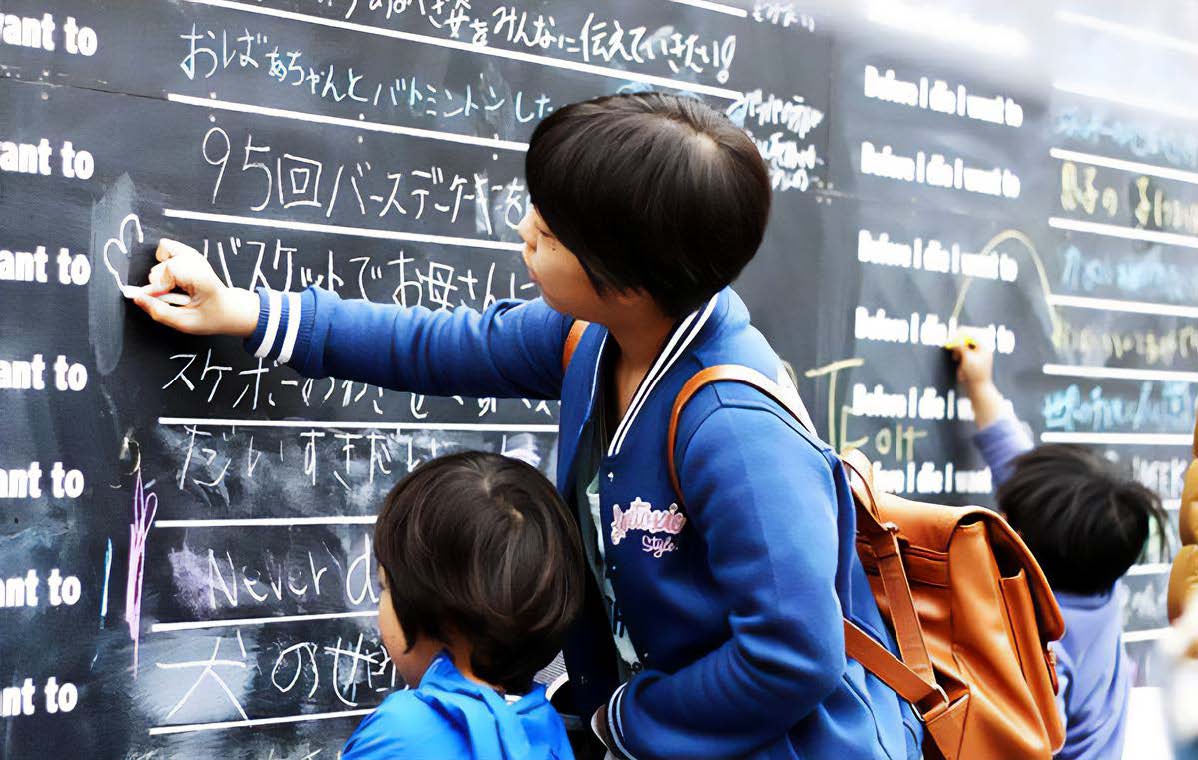
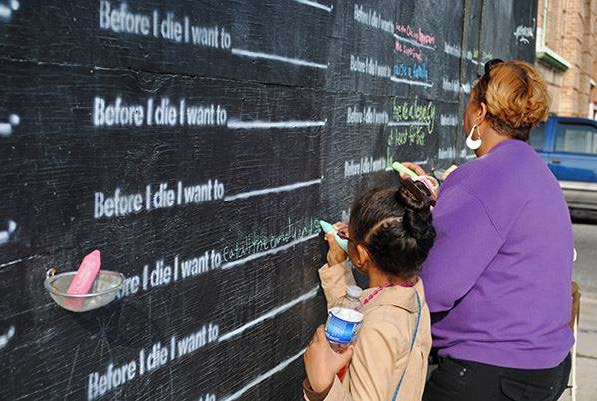
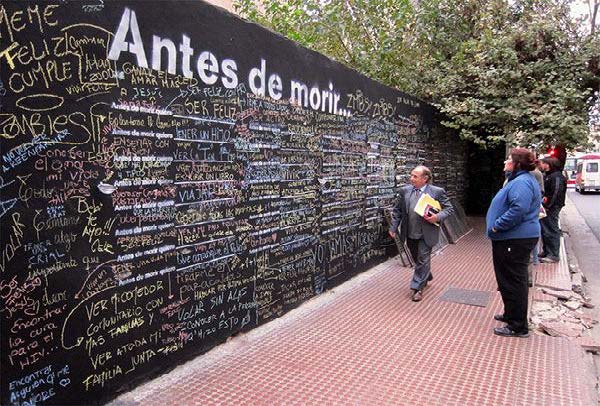
It’s easy to get caught up in the day-to-day and forget what really matters to us. Before I Die is a global public art project that invites people to reflect on their lives and share their personal aspirations in public. Originally created by the artist Candy Chang after the death of a loved one, this installation is here thanks to local residents who want to create a space to restore perspective and reflect with their community. More than 5,000 walls have been created around the world. This wall is yours. Enjoy.
Artist Statement by Candy Chang:
I never expected Before I Die to go beyond my neighborhood. I created the first wall on an abandoned house near my home in New Orleans after the death of someone I loved. Joan was like a mother to me for fifteen years and there were still so many things she wanted to do: learn to play the piano, live in France, see the Pacific Ocean. Her sudden death sent me into a long period of grief and depression. I grew up secular and felt a shocking lack of instruction or ritual in my life. Everything felt absurd. My inner world felt like it didn’t belong outside at all.
I lived a block away from this abandoned house that had been collecting dust and graffiti for years. It looked sadder than me, and it finally crossed my mind that it would break Joan’s heart if she knew that her death made me give up. I wondered if I could do something to honor her and reflect on mortality.
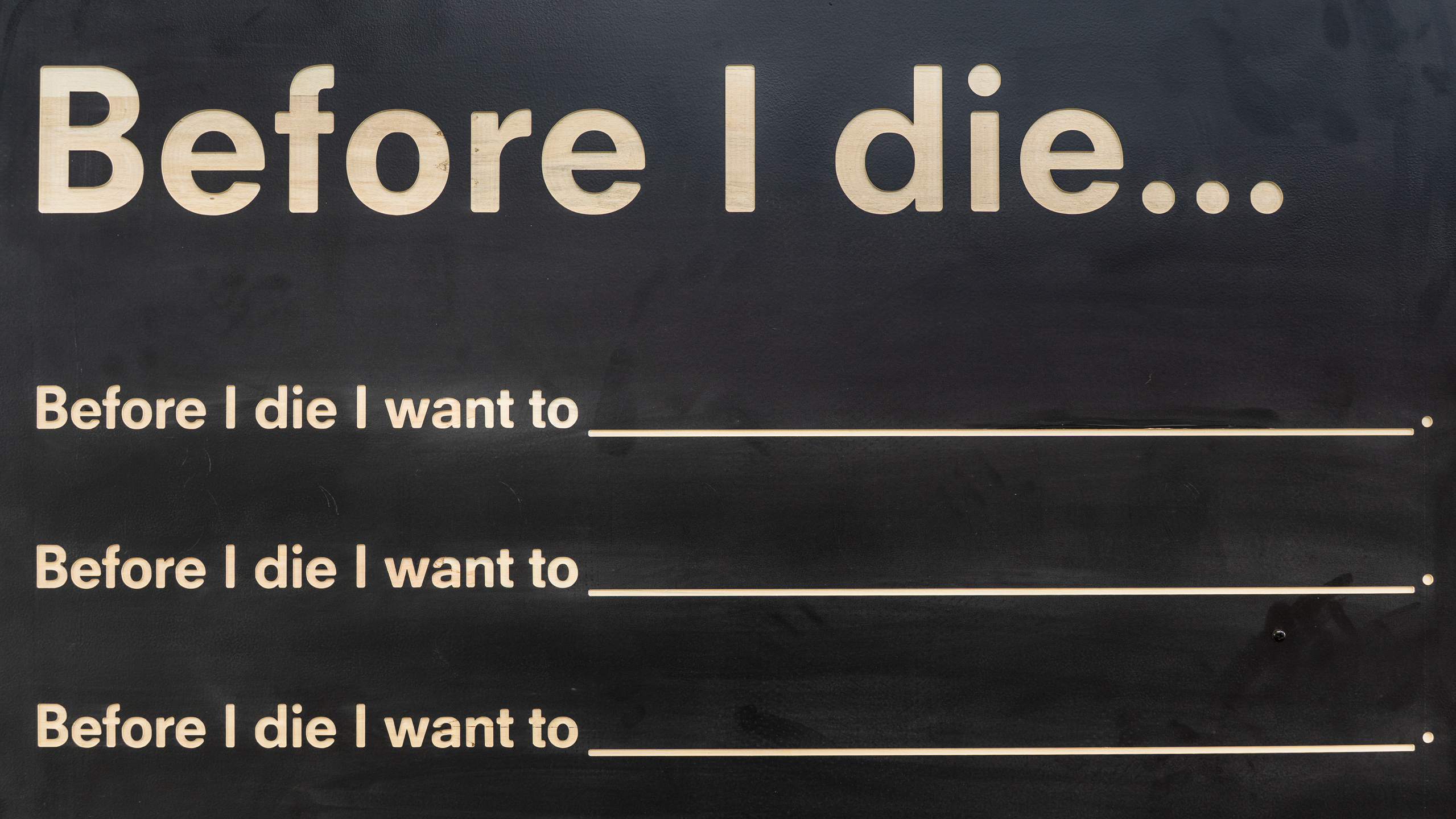
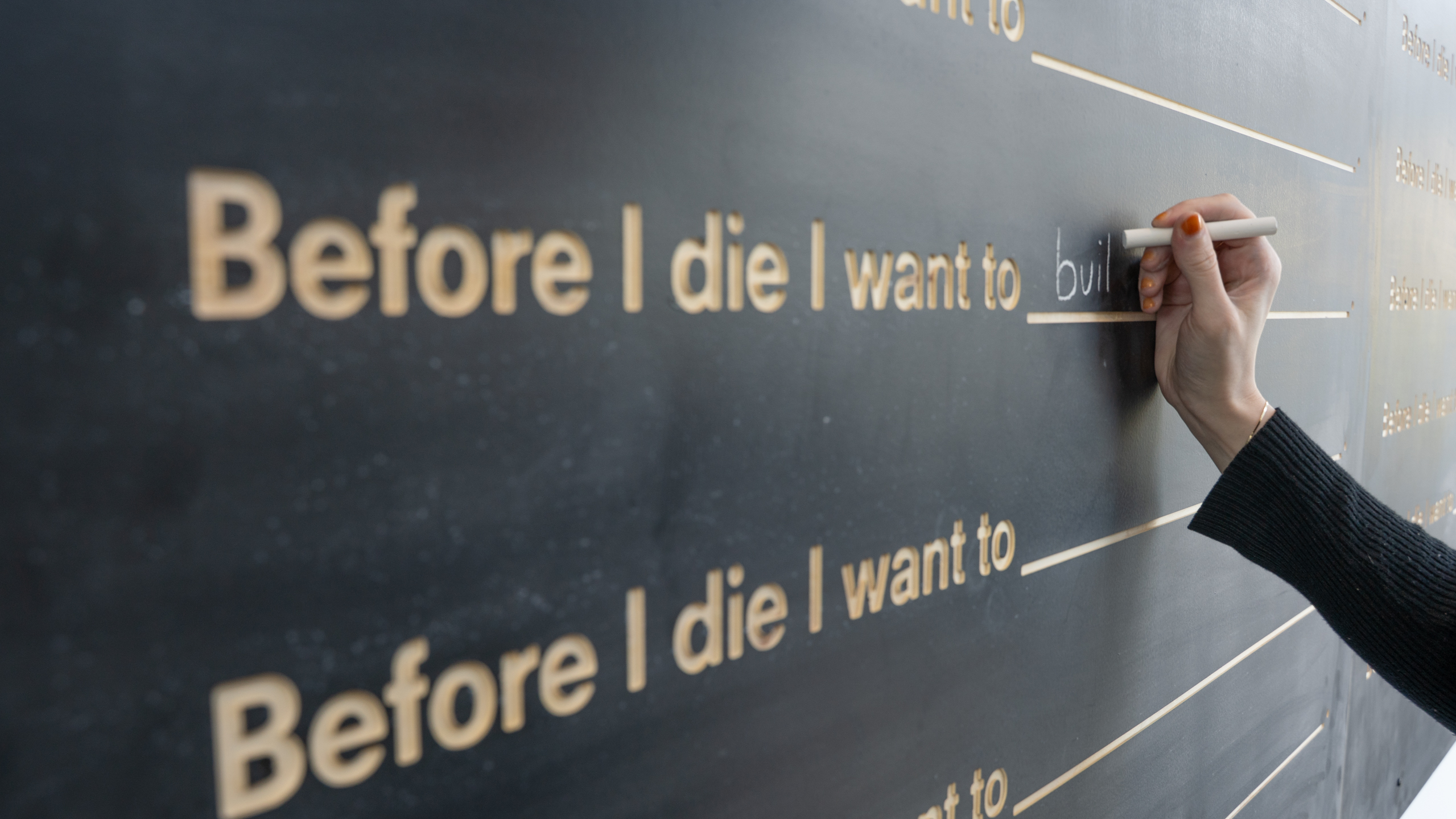
I made a homemade stencil that said, “Before I die I want to _____.” With help from old and new friends, I painted the side of this crumbling house with chalkboard paint and stenciled it with this prompt, so anyone walking by could pick up a piece of chalk, reflect on death and life, and share their personal aspirations in public. In my mind it was just another experiment, and I didn’t know what to expect. Because it was cheap to make, I thought it was no big deal if it didn’t work out.
The next day, the wall was entirely filled out and it kept growing.
Before I die I want to… get my wife back, overcome addiction, forgive my parents for their shortcomings, eat more everything, see a woman become president, be the man she believes I am, build a school, make a livable wage, see the leaves change many times, see him one more time, see what I’m like as an old man, evaporate into the light…
I saw my neighbors in a new light, and the wall became an honest mess of longing, fear, insecurity, gratitude, humor, pain, and grace. I remember the responses that resonated with me most were the heartbreaking ones, the devastating ones, the ones you wouldn’t typically tell a stranger. They made me feel less alone and gave me courage to face my own struggles. And it taught me the value of anonymity. When we anonymously share without fear of judgment or desire for recognition, what emerges looks profoundly different and more honest than performative digital forums.
This neglected space became a constructive one, and people who ordinarily had little to do with one another began taking care of it. People donated chalk. People helped me wash down the wall when it was completely full. Neighbors introduced themselves in front of the wall while reading through the day’s responses. The grandmother who lives across the street said, “People are around all the time. The block is safer now.”
There were a handful of wise-ass comments. The world will always have boys who want to draw dicks in public space, but people erased them — it’s chalk! — and they were profoundly eclipsed by thousands of sincere responses that made me feel close to my community in a way I never felt before. Introverts like me could share just as much as the extroverts. I also learned that when the wall begins with a few thoughtful responses, it can set the tone and the way others share.
Ten months later, the wall in New Orleans ended for happy reasons: a new owner bought the property and the house became a home again. But this wasn’t the end of the project: I received hundreds of messages from people around the world who wanted to make walls with their communities. I enjoyed traveling everywhere from Almaty, Kazakhstan to Querétaro, Mexico to make walls with students, arts organizations, and residents. However, I couldn’t keep up with the requests, and I quickly realized I wasn’t needed. The beauty of the project is its simplicity.
So, I made a step-by-step guide for anyone to make their own wall. And today, thanks to passionate people around the world, over 5,000 Before I Die walls have been created in over 75 countries and over 35 languages.
It’s been one of the greatest experiences of my life to see this little experiment grow into a global project, a kind of memento mori for the modern age. It’s easy to get caught up in the day-to-day. Contemplating death is the quickest way to crush the trivial, restore perspective, and redefine what’s meaningful to you at every age. People have asked if they can remix the project, and I say yes please feel free — ideas come from other ideas, so people have made all kinds of walls, including When I graduate I want to…, I love Heraklion because…, Happiness is…, I go downtown because…, Lebanon would be better if…
I am continuously inspired by everyone’s walls… and this project sparked my life-long interest in the future of ritual in public life. I crave shard spaces to commune over existential questions without the requirement of shared doctrine. It feels even more pressing as we grapple with epidemic loneliness, deepening polarization, online judgment, and the disembodiment that comes from living behind screens. How can we create emotional infrastructure that speaks to the pains of our age? It not only serves fundamental needs of the human spirit, it cultivates a sense of belonging, which is vital for civic life.
MEMORY STONES
Community Art Activations | Inter-Cultural Art Project
Community Collaborator | CV HOSPICE SOCIETY
Pianist | RACHEL KIYO IWAASA
Project Description:
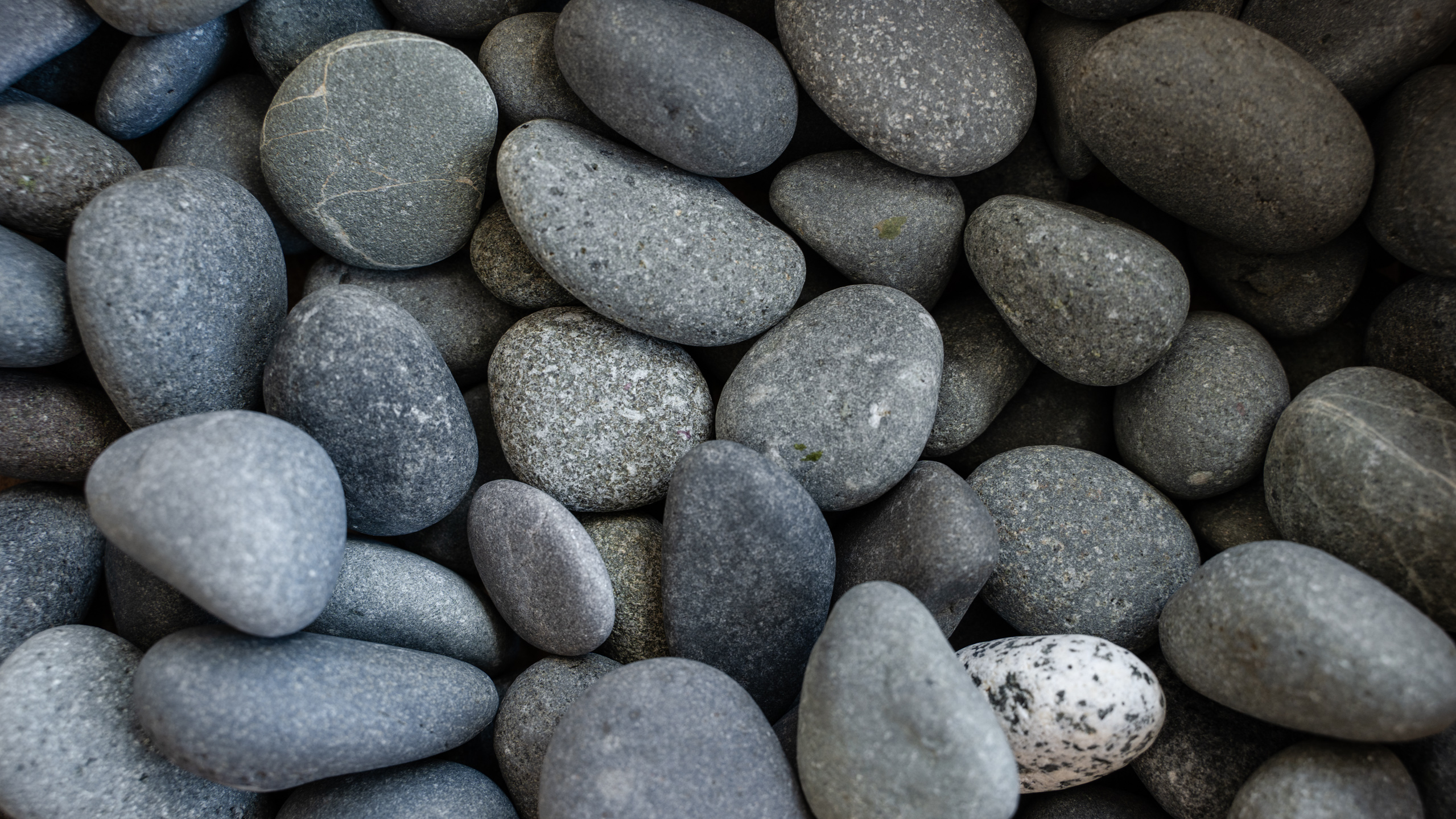
Grief does not need to be solved or set aside. It asks only to be felt. To hold a stone while moving through this exhibition is to give that feeling a form. Its surface becomes a place to gather memory, feeling, and all that cannot be said aloud.
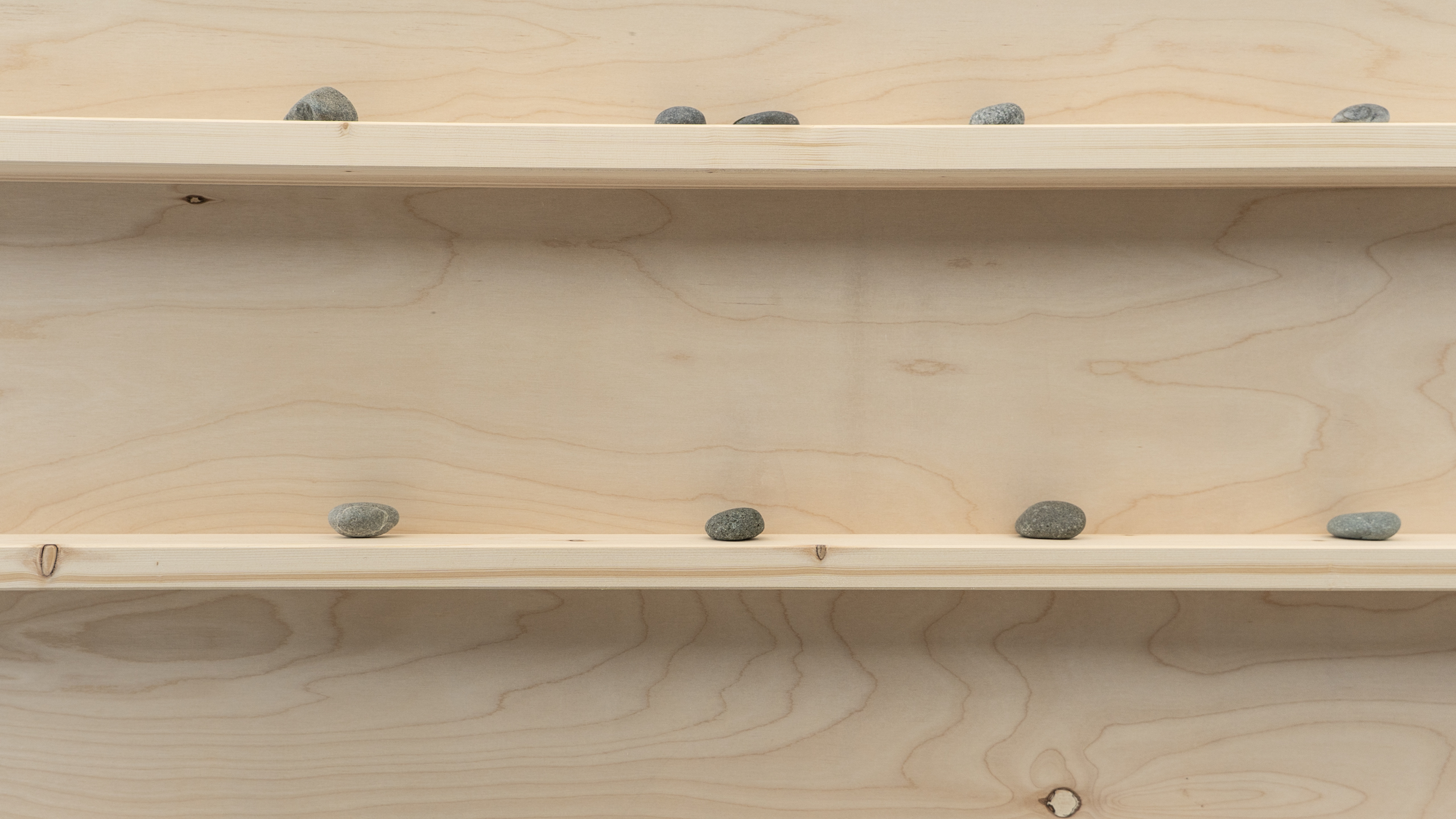
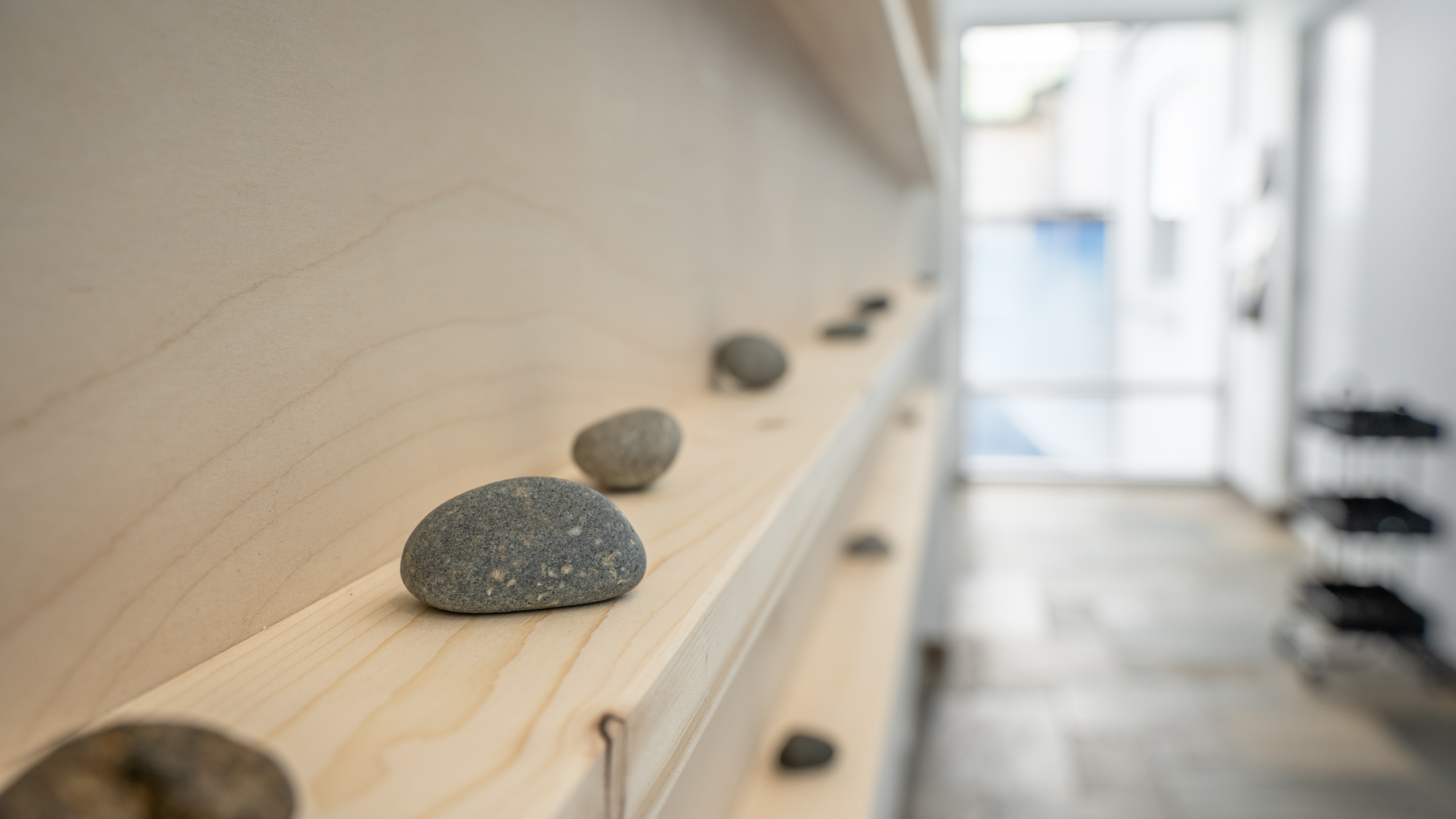
Across time and cultures, stones have marked loss and remembrance. Stones do not fade or wither. They remain. To place your stone on the shelf is not to let go of grief, but to acknowledge it. It is a quiet gesture that says this mattered. Each stone carries a story that cannot be seen, and set amongst others, it becomes part of the shared experience of loss and care. Grief, like the stone, has weight. But it can be carried, witnessed, and, for a moment, set down.
Instructions for Visitors:
At the beginning of your visit, you are invited to choose a stone and carry it with you as you move through the exhibition. You may hold it, turn it in your hands, or simply keep it close. As you engage with the works, you might place an intention into the stone, reflect on a loss, or bring to mind someone or something you are grieving. When you have finished, please place your stone on one of the shelves. Over time, these stones will gather into a collective expression of memory, grief, and shared human experience.
COMOX VALLEY HOSPICE SOCIETY
About our Community Collaborator:
The Comox Valley Hospice Society (CVHS) offers emotional and psychosocial support services to ease the journey of dying, grieving, and caregiving. Compassionate care is brought to the community through a diverse group of trained volunteers and staff who demonstrate a philosophy of care that supports the process of death and dying in hospice, in hospital, facilities, or in people’s homes. At the core of CVHS is the belief that living with an illness, dying, caregiving, and grieving is a normal part of life and a commitment to the art of living, honouring each person’s dignity at all stages of life.
CVHS offers individual counselling, support groups, community peer groups, a variety of visiting programs, resources, Advance Care Planning and community education at no charge and is primarily funded by individual donations, grants and bequests.
“At Hospice we believe that living with an illness, dying, caregiving and grieving are normal parts of life. We also believe that living life to the fullest is important for each of us. Our hope is that when an illness occurs or people are dying in our community they will experience dignity and peace; their caregivers will receive the help they need; and they, and their families and friends, will be supported in their grief.”
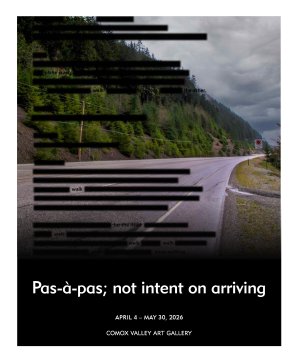
This exhibition is presented in honour of the National Hospice and Palliative Care Week in Canada and as an extension of Pas-à-pas; not intent on arriving at the Comox Valley Art Gallery.